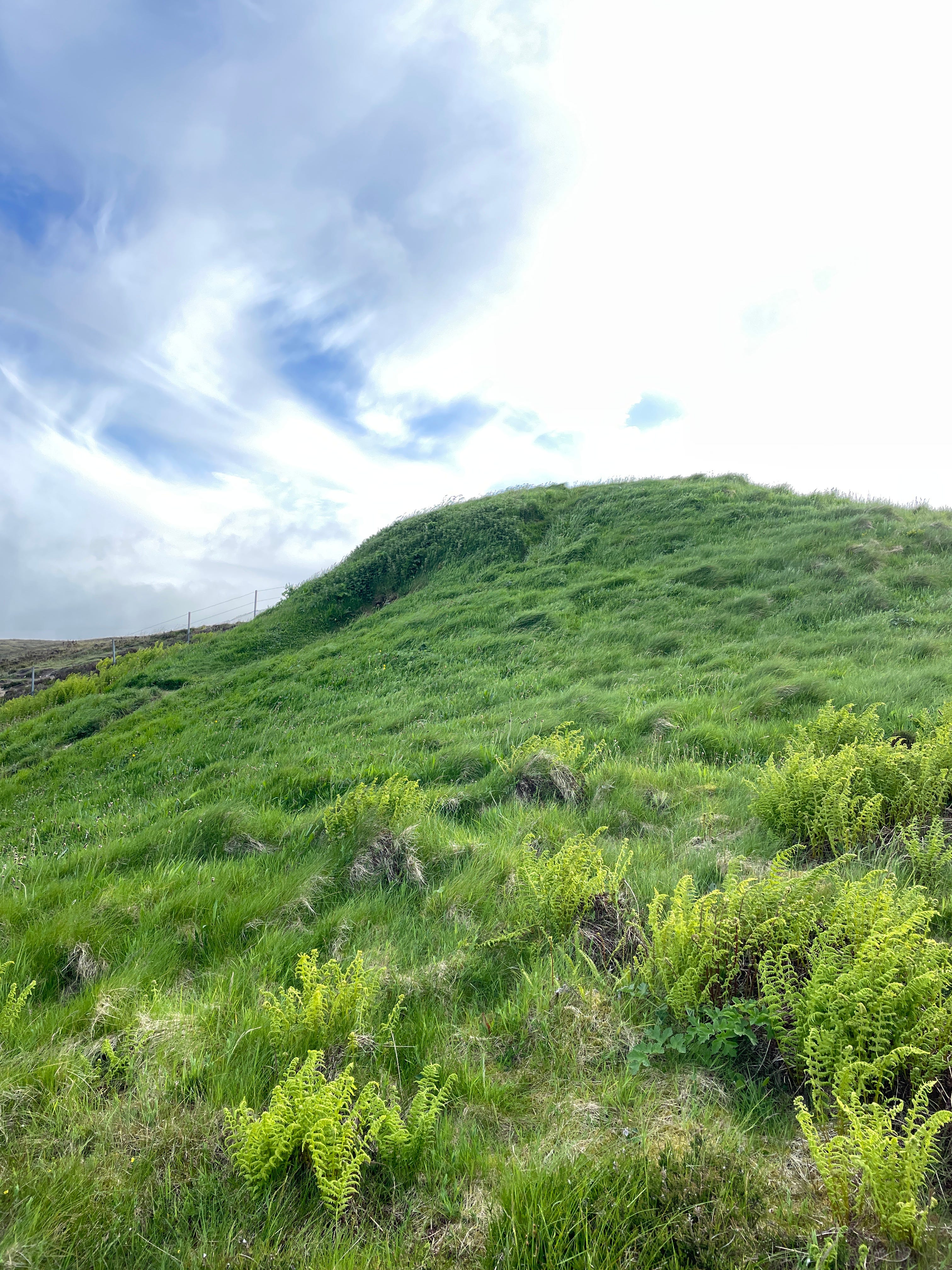
Let's Visit a Neolithic "Chambered Cairn"!
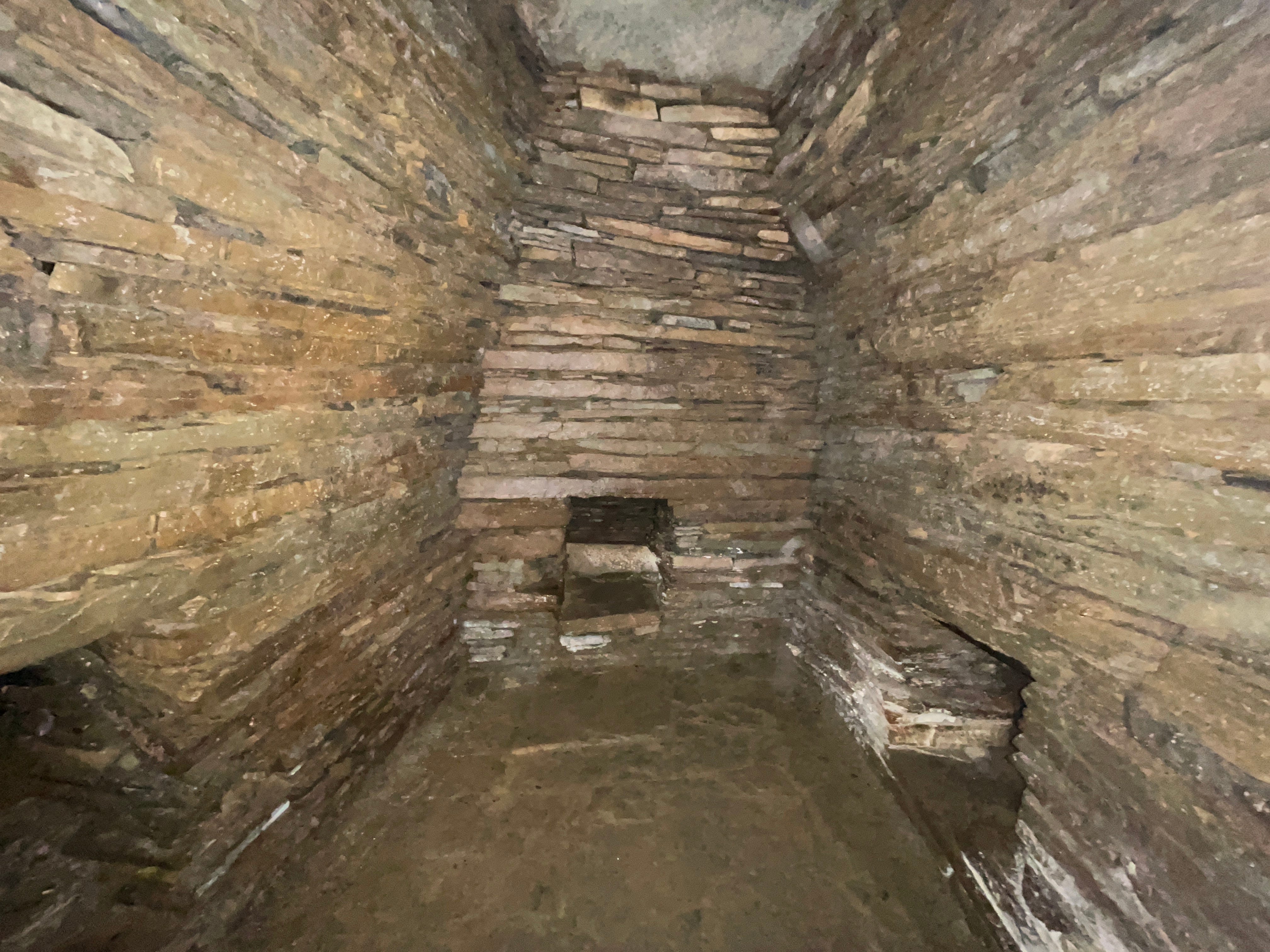
The skulls of 24 dogs were found at this 5000-year-old site on Orkney, Scotland.

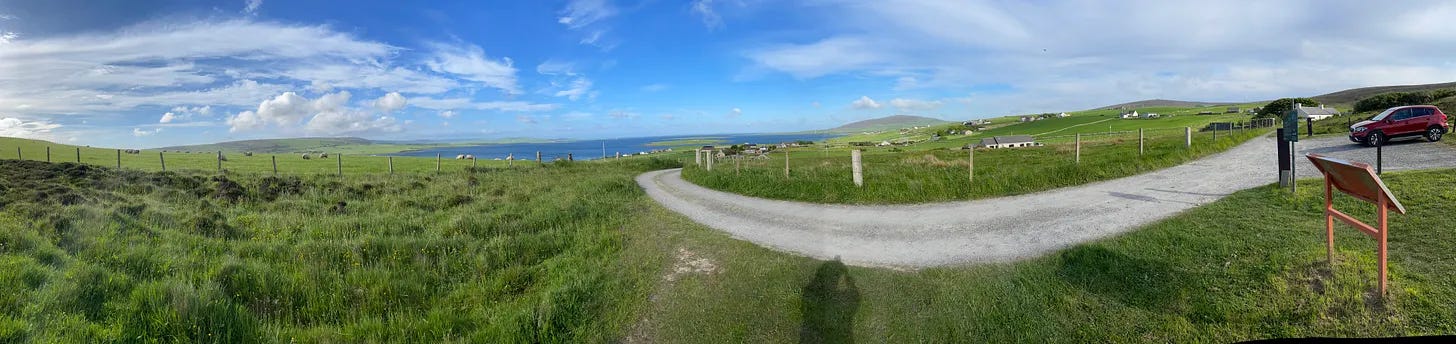
Two years ago I was in a rented car, winding over hills on small Scottish roads, searching out some of the lesser-known structures around the Heart of Neolithic Orkney World Heritage Site.
Orkney, as you may know, is a cluster of islands nine miles north of the north coast of Scotland. The largest island is known as “Mainland Orkney.” On the east side of the island is the town of Kirkwall, and on the west side is the smaller town of Stromness, which hosts the Orkney Folk Festival every year in the month of May.
The four major sites on Mainland Orkney are the awe-inspiring standing stones of the Ring of Brodgar and the Stones of Stenness; the massive chambered tomb of Maeshowe; and the remarkably preserved 5000-year-old settlement of Skara Brae.
“The monuments on the Brodgar and Stenness peninsulas were deliberately situated within a vast topographic bowl formed by a series of visually interconnected ridgelines stretching from Hoy to Greeny Hill and back. They are also visually linked to other contemporary and later monuments around the lochs. They thus form a fundamental part of a wider, highly complex archaeological landscape, which stretches over much of Orkney.”
—UNESCO World Heritage website
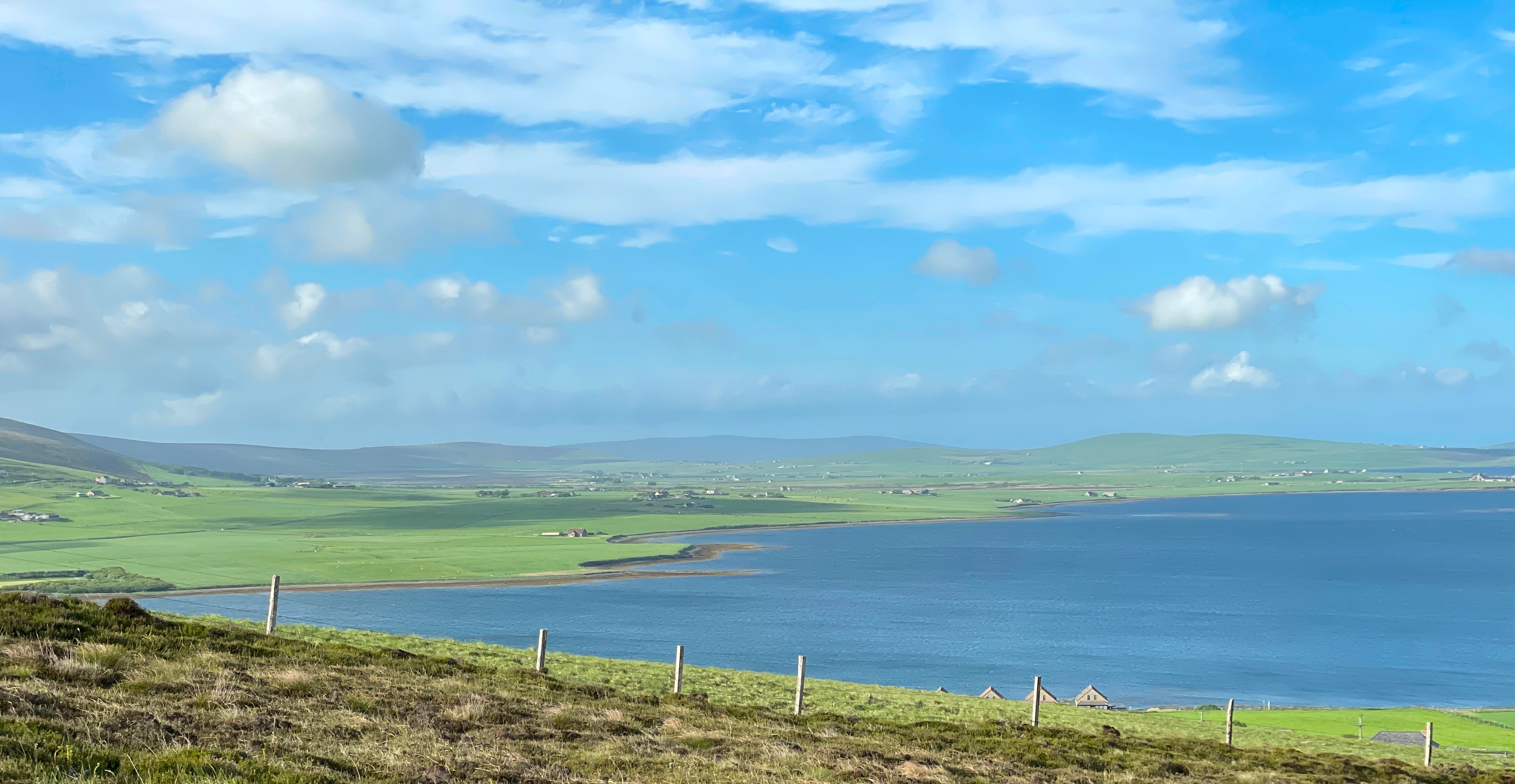
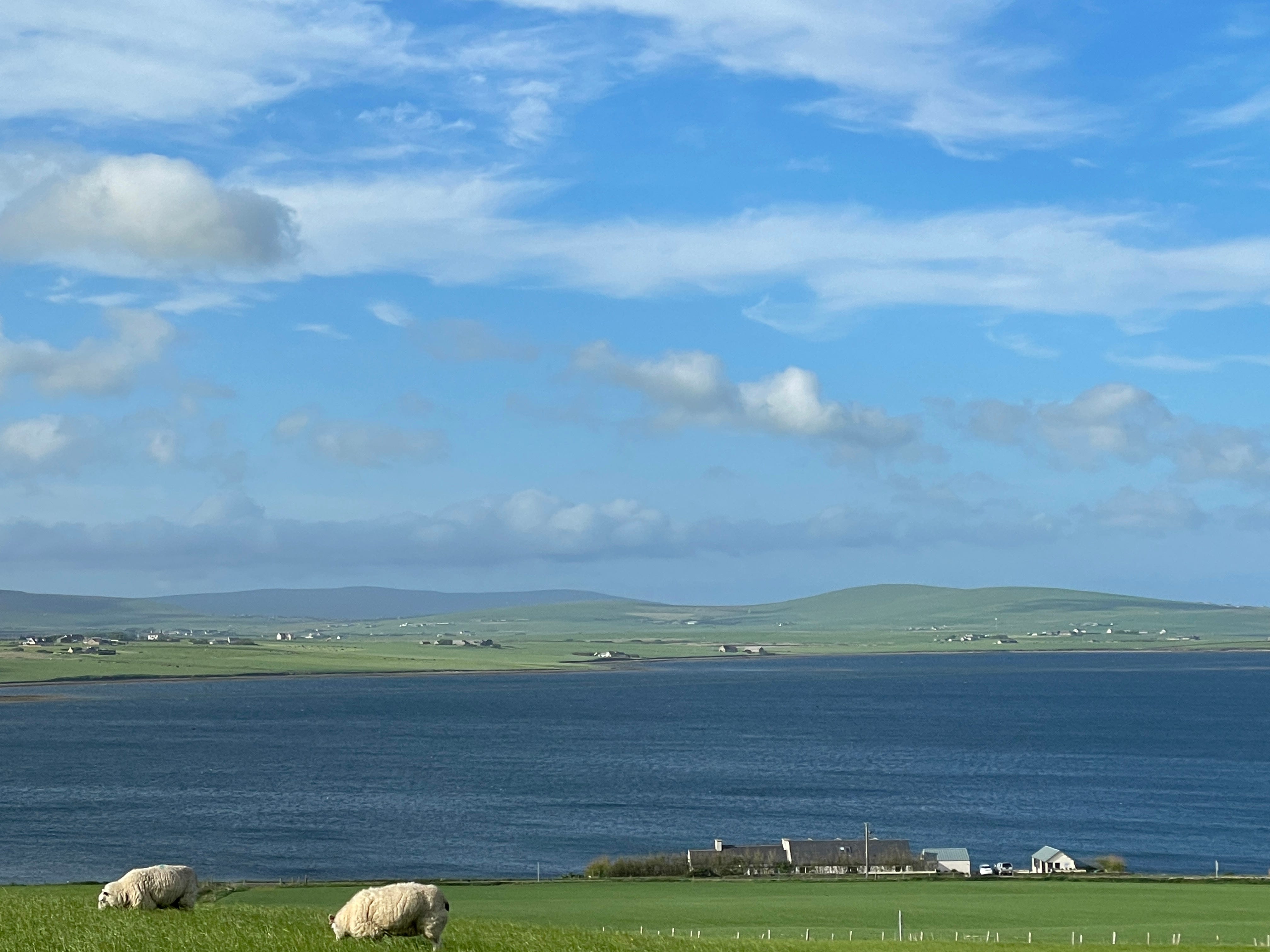
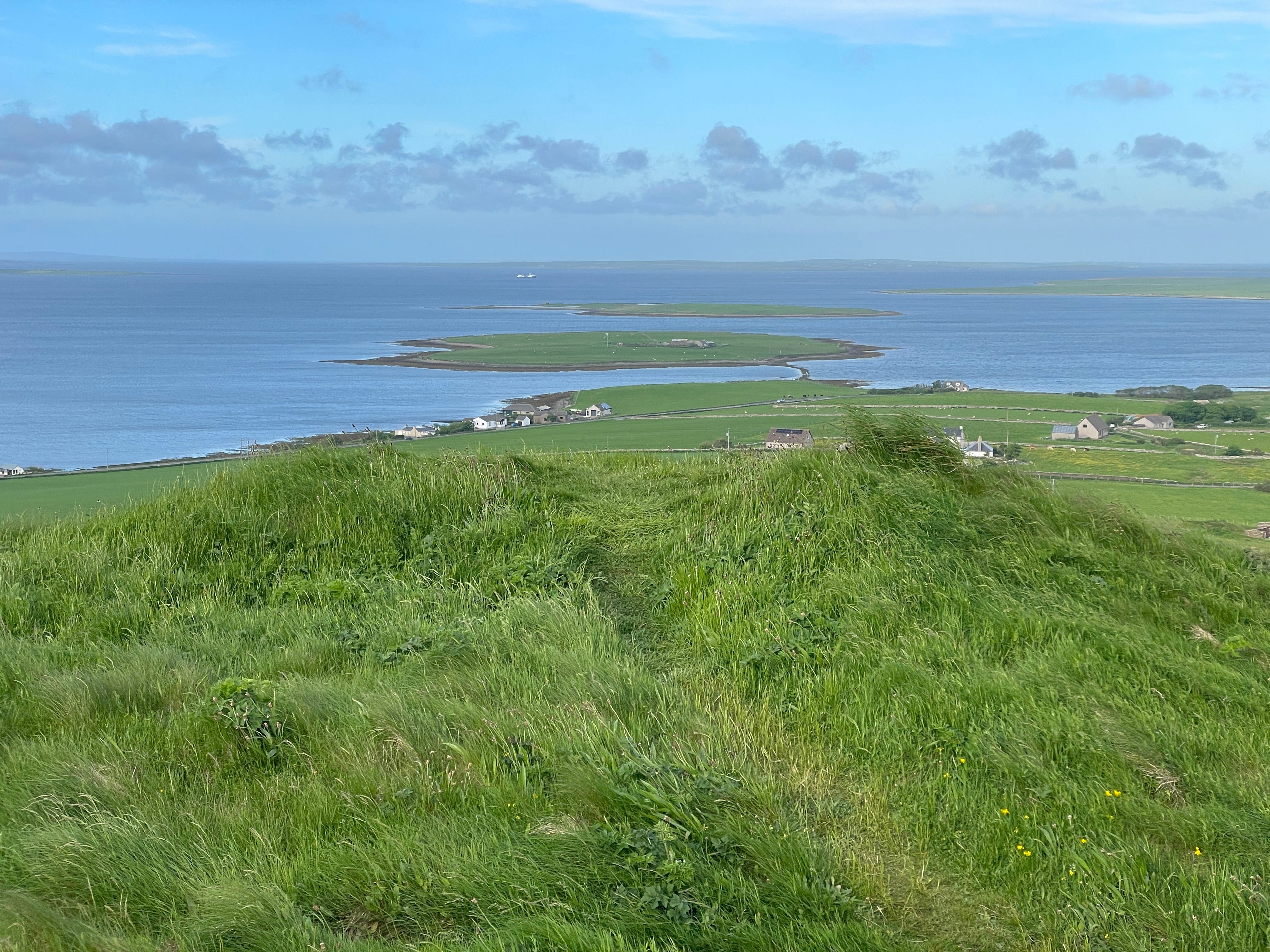
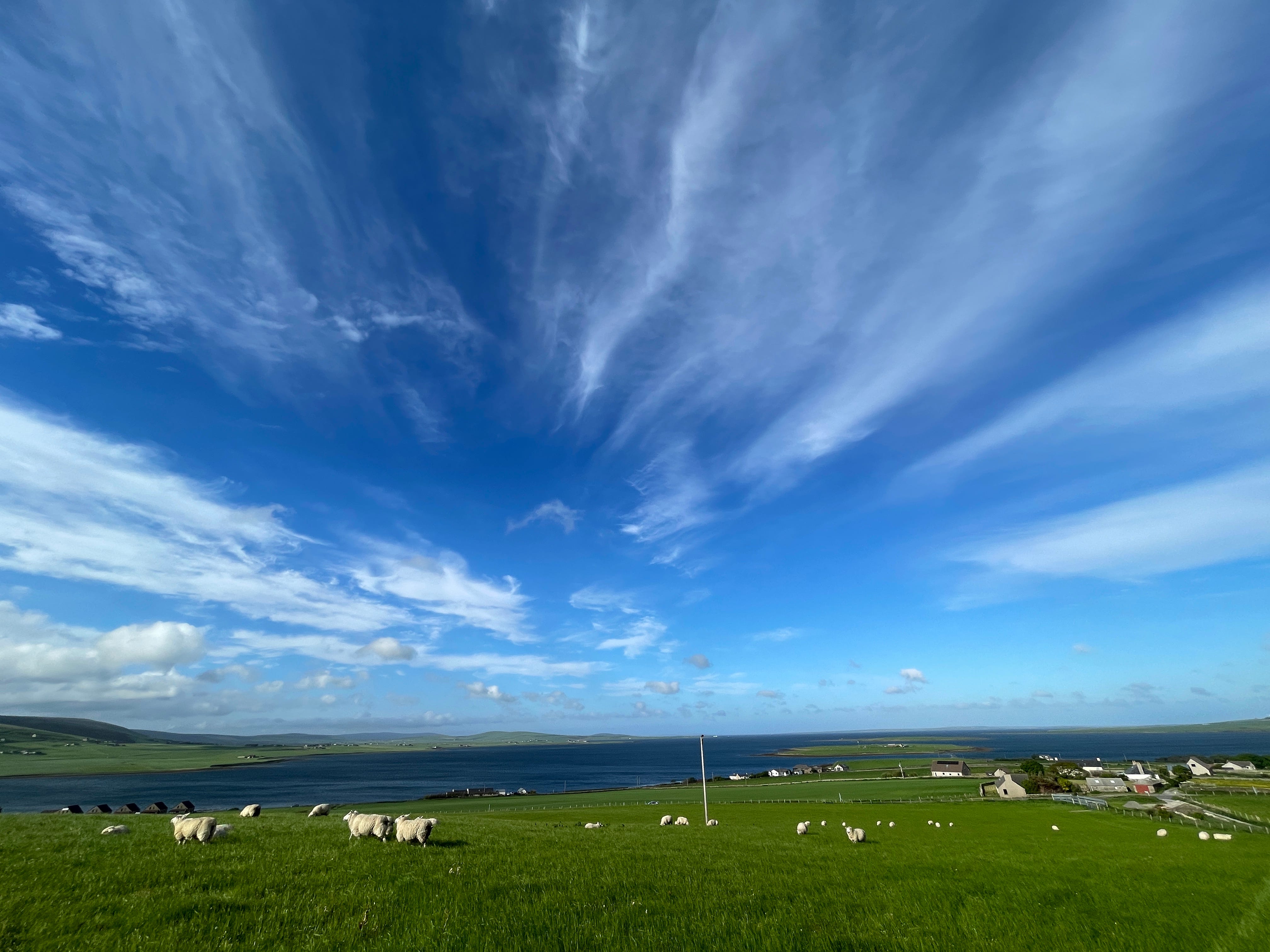
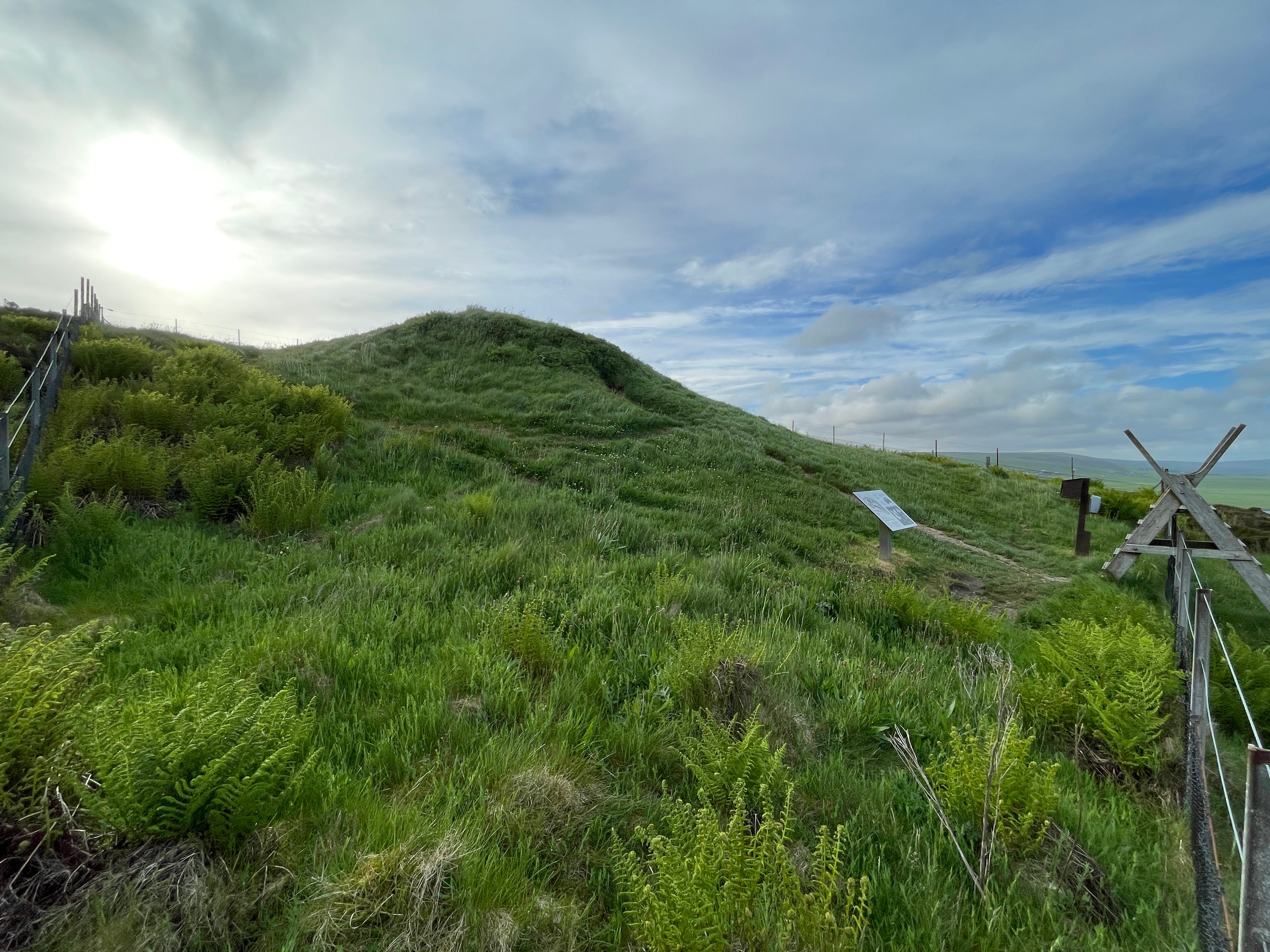
On this day, however, I was off the main trail, scouting for the smaller site at Cuween Hill (which, I believe, is pronounced like “cue win”). Unlike the other ancient sites huddled by the silver-blue waters of the Loch of Stenness and the Loch of Harray, this site, as the name implies, is up a hillside.
The elevated view is enchanting and can leave one prone to feelings of timelessness and numinous appreciation for these temples, tombs, and earthworks.
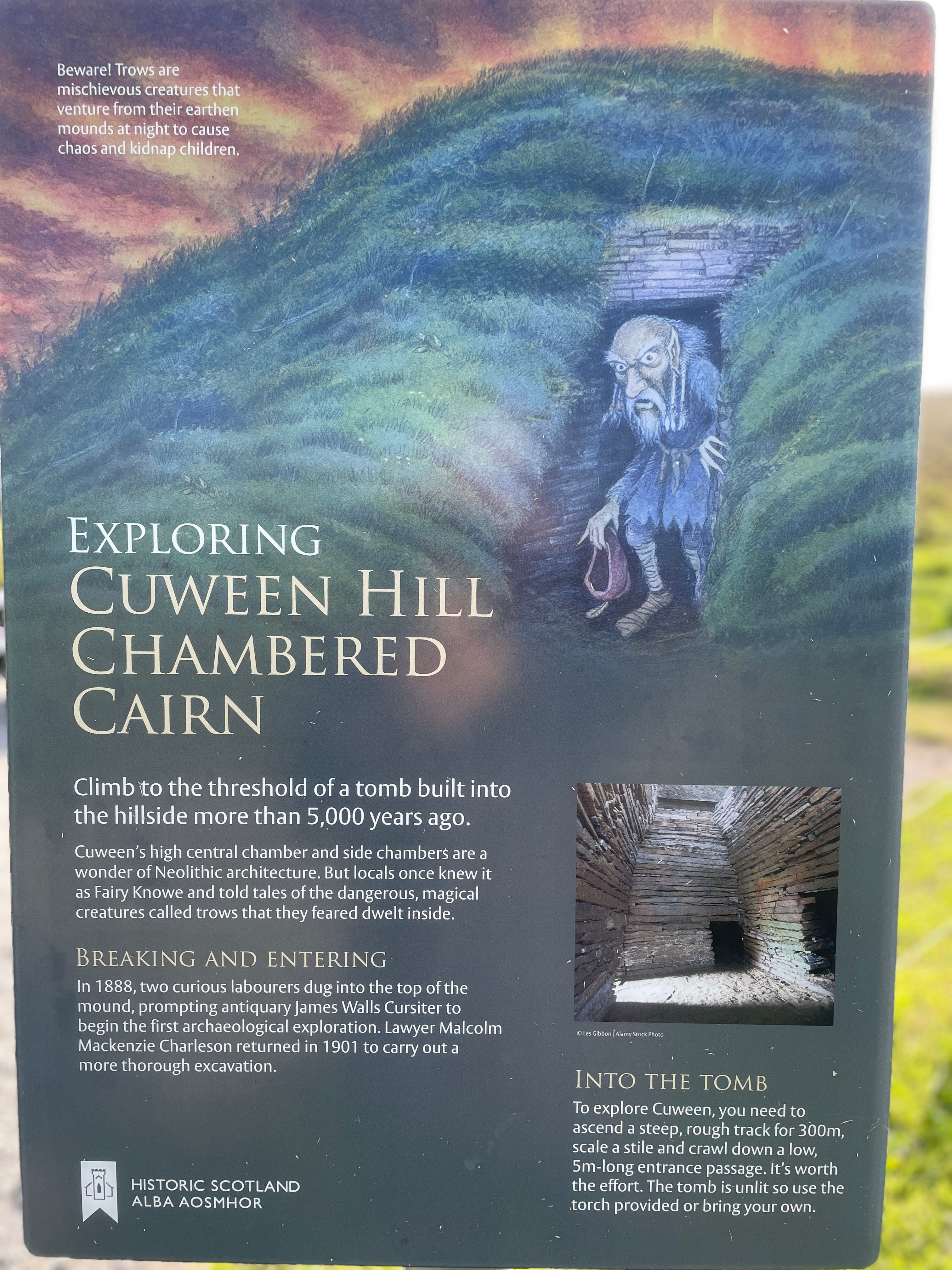
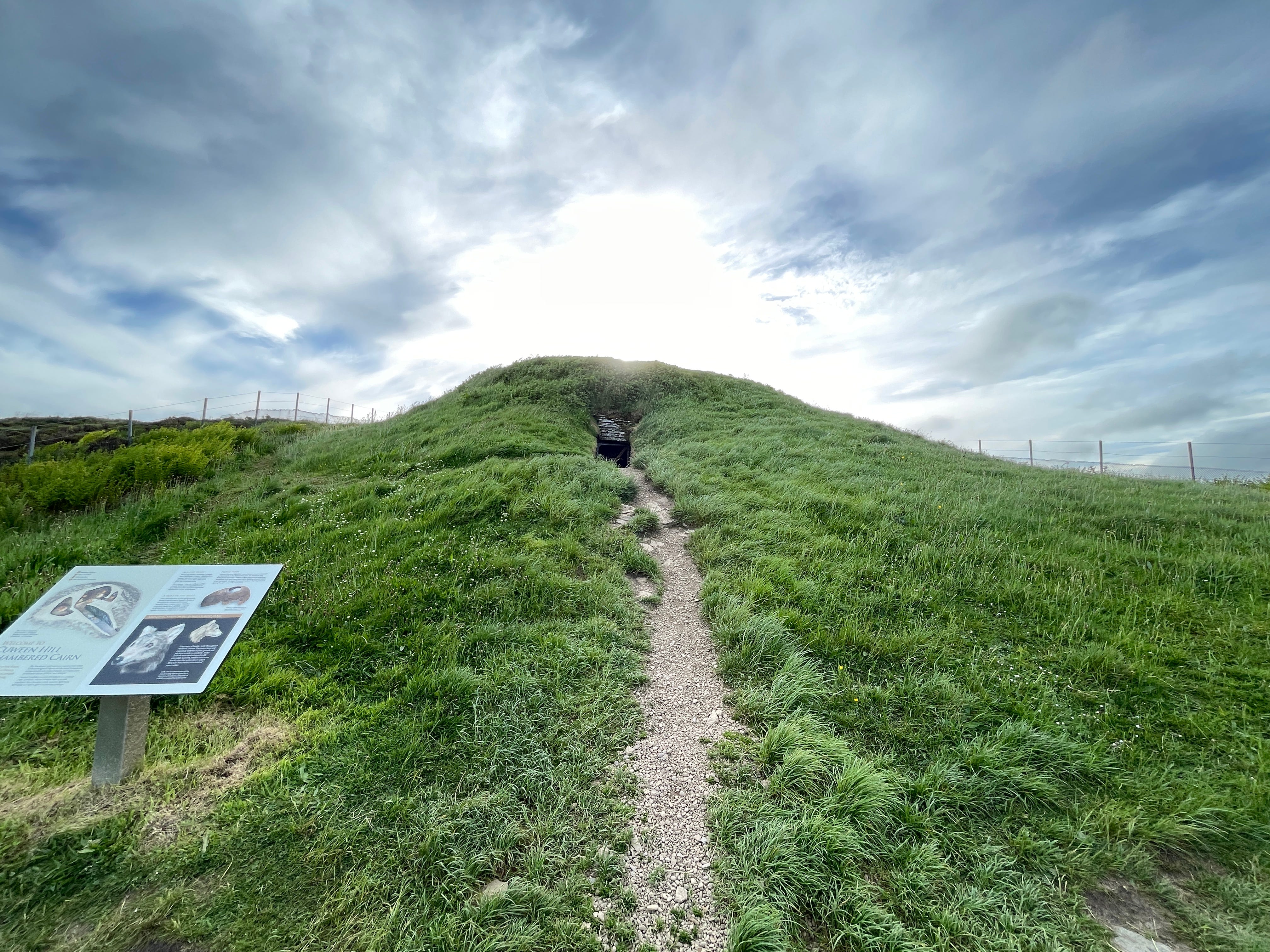
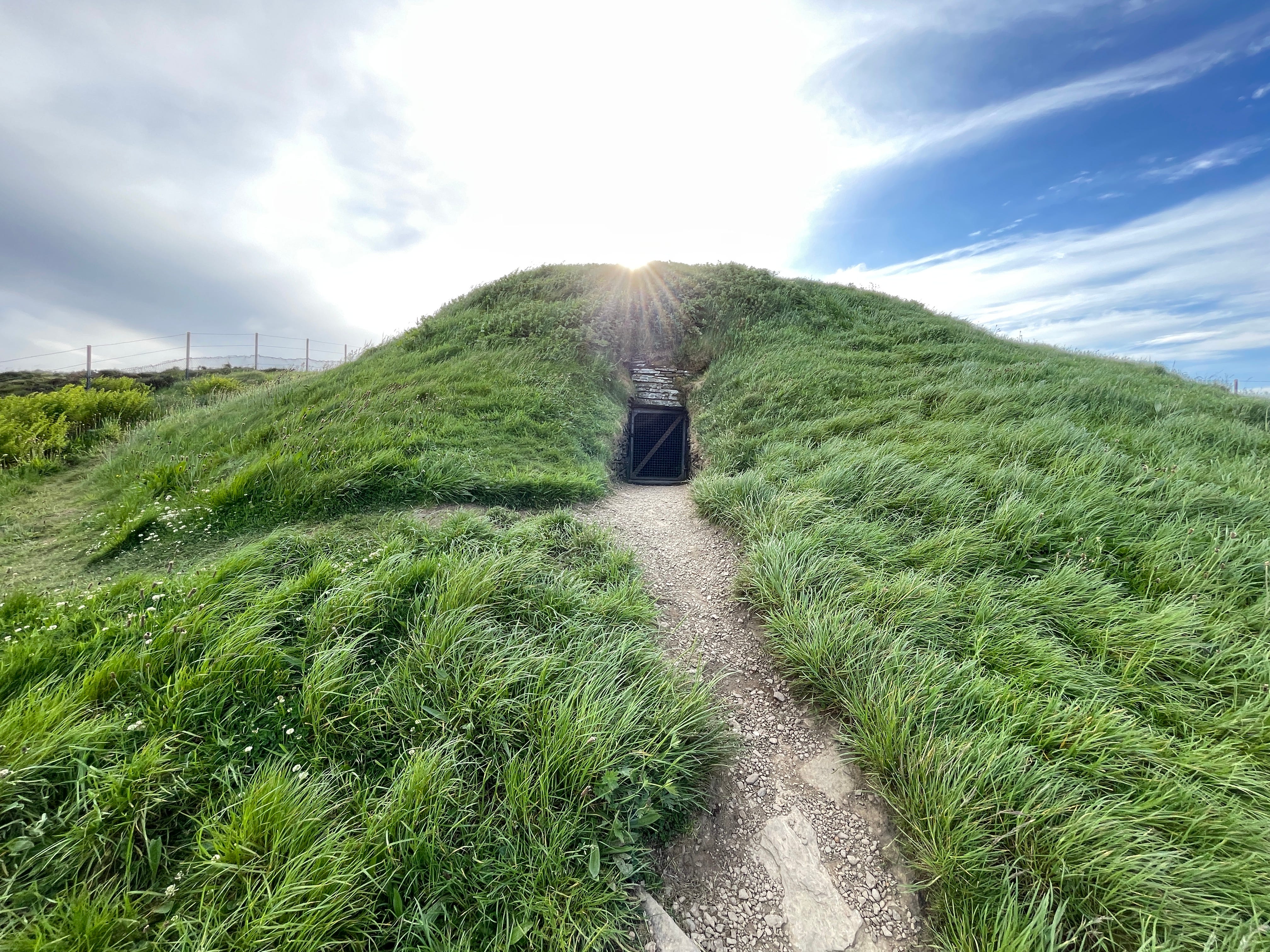
One of the Finest Neolithic Tombs in Orkney
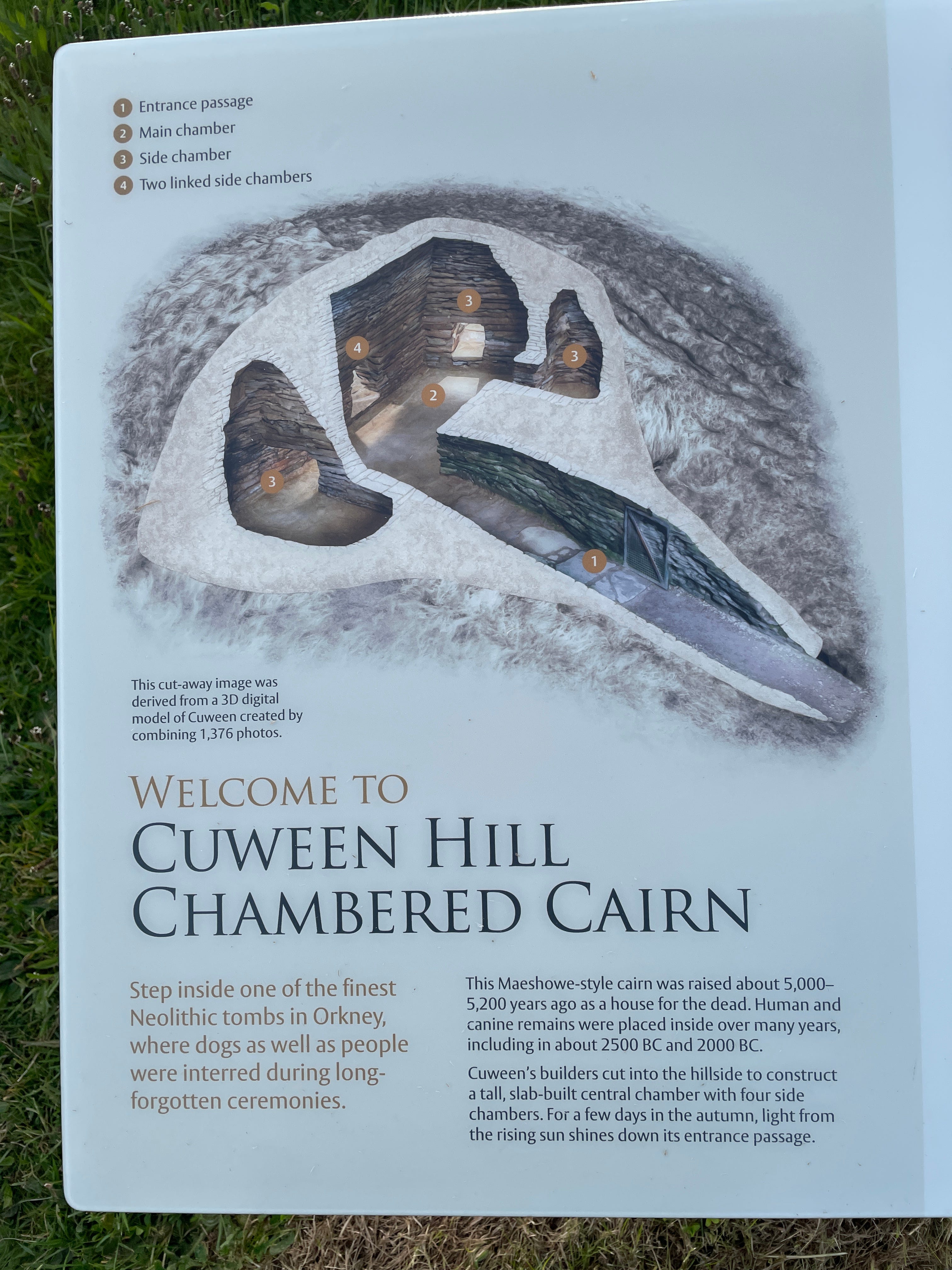
Dogs As Well As People
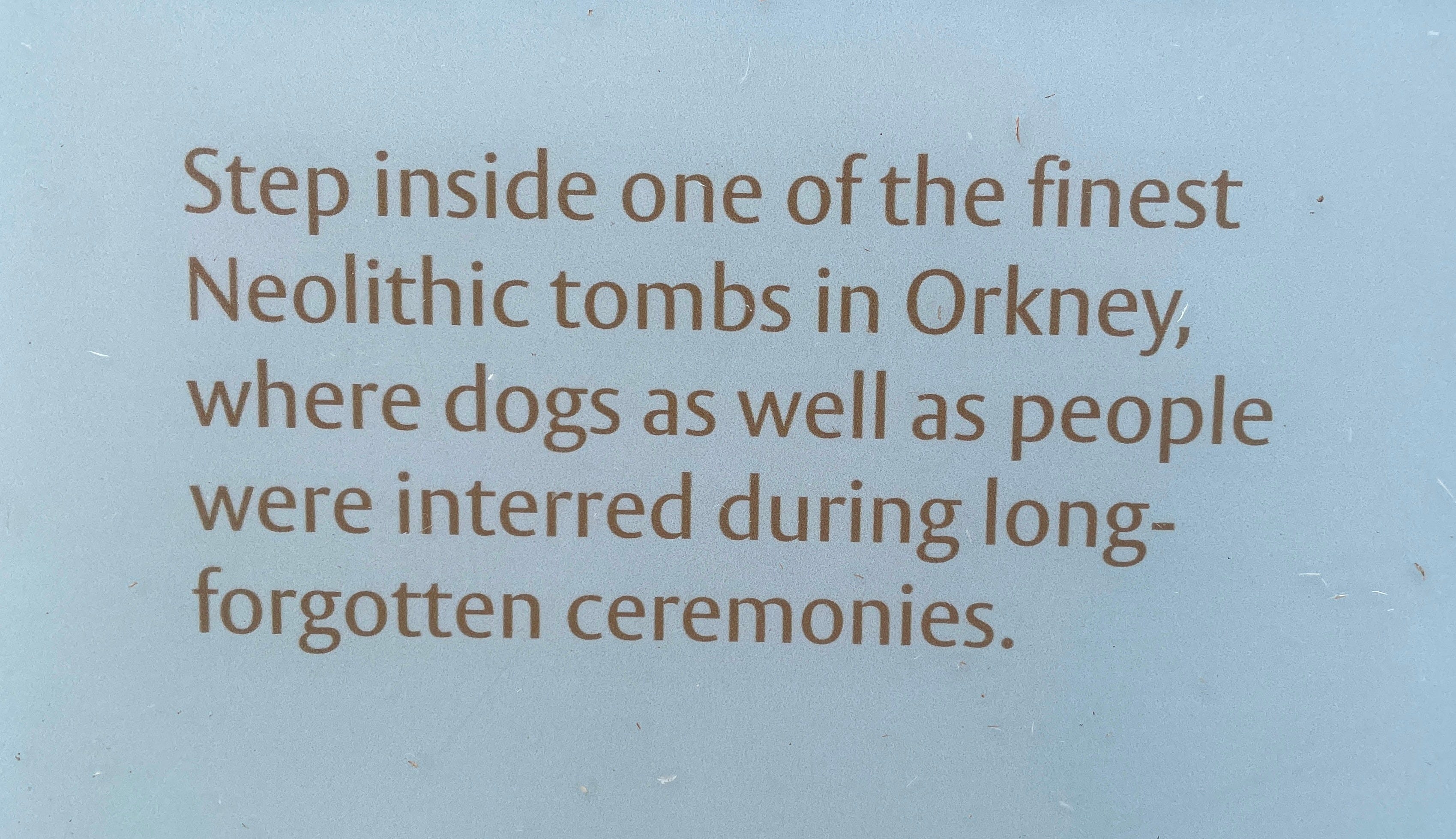
A House for the Dead, built 5000-5200 Years Ago
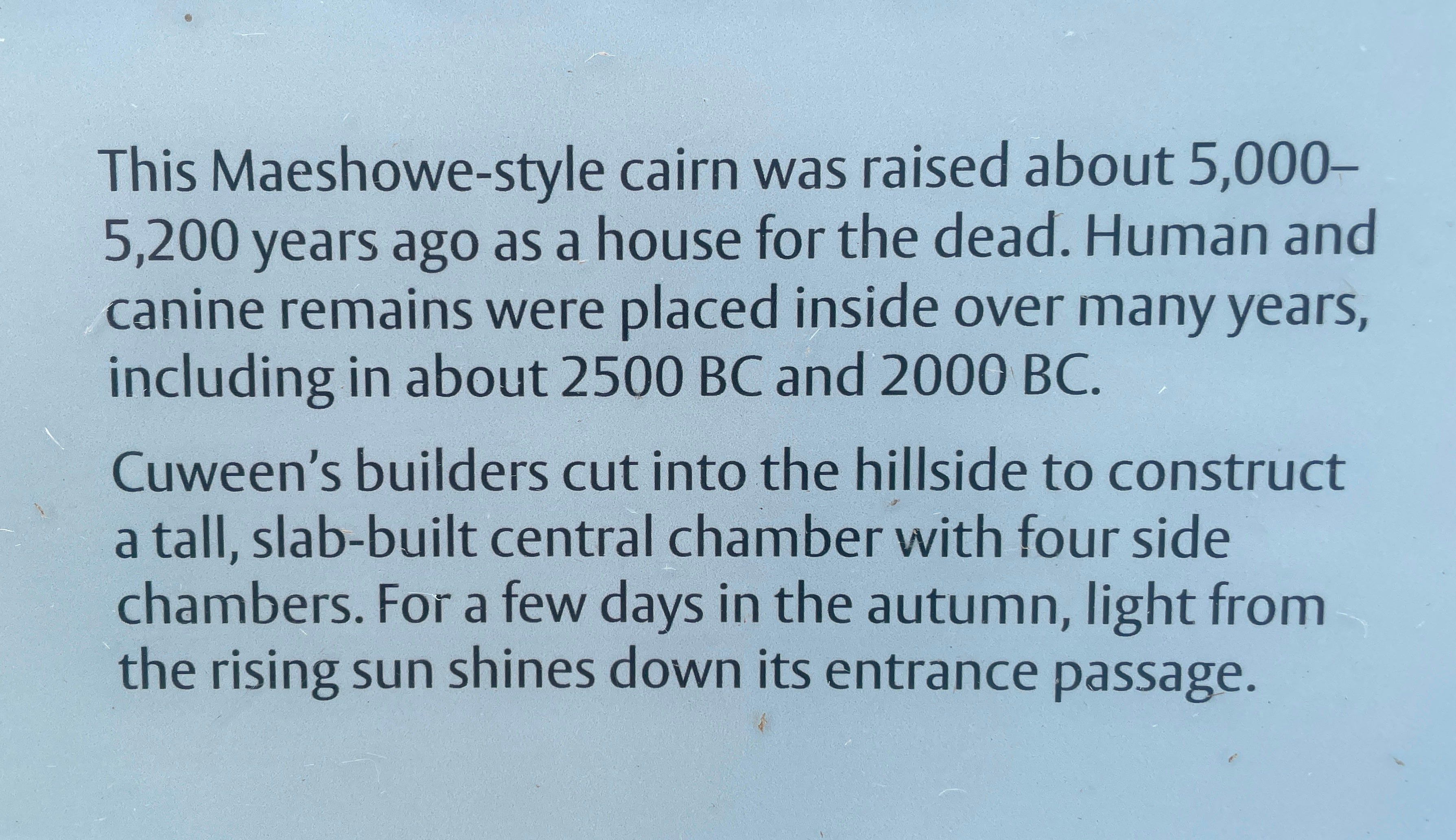
Aisle of Dogs
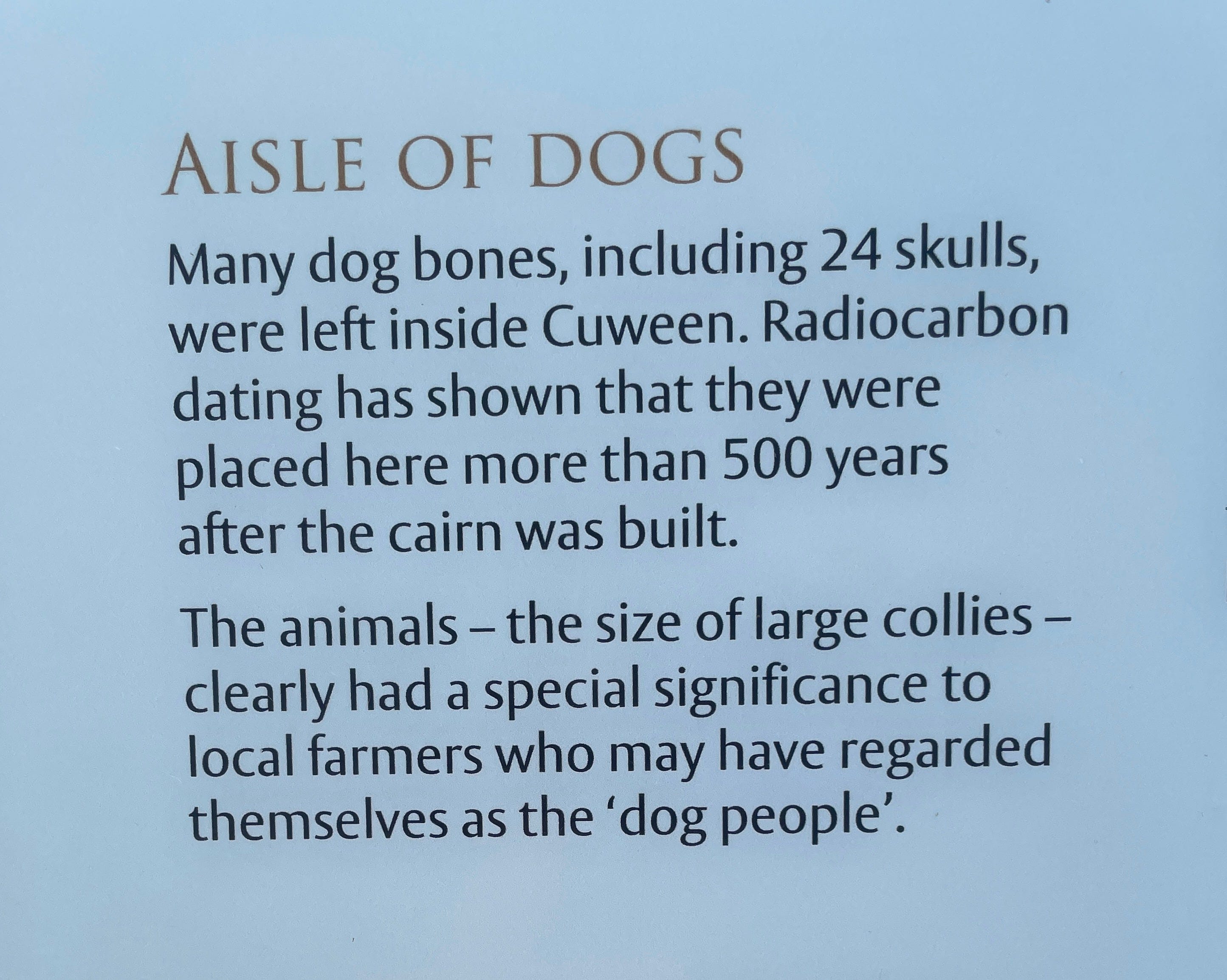
Let’s Go Inside!
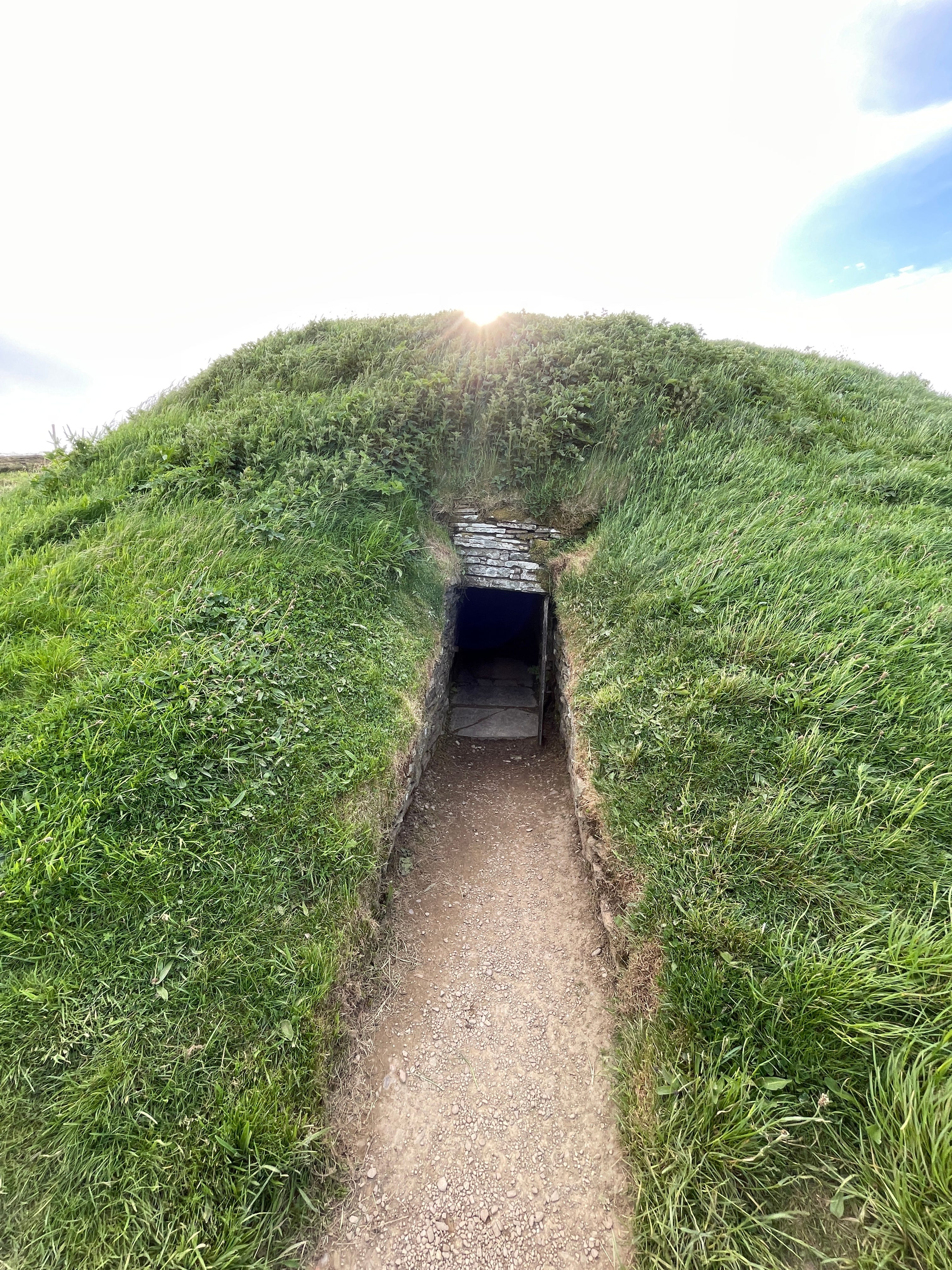
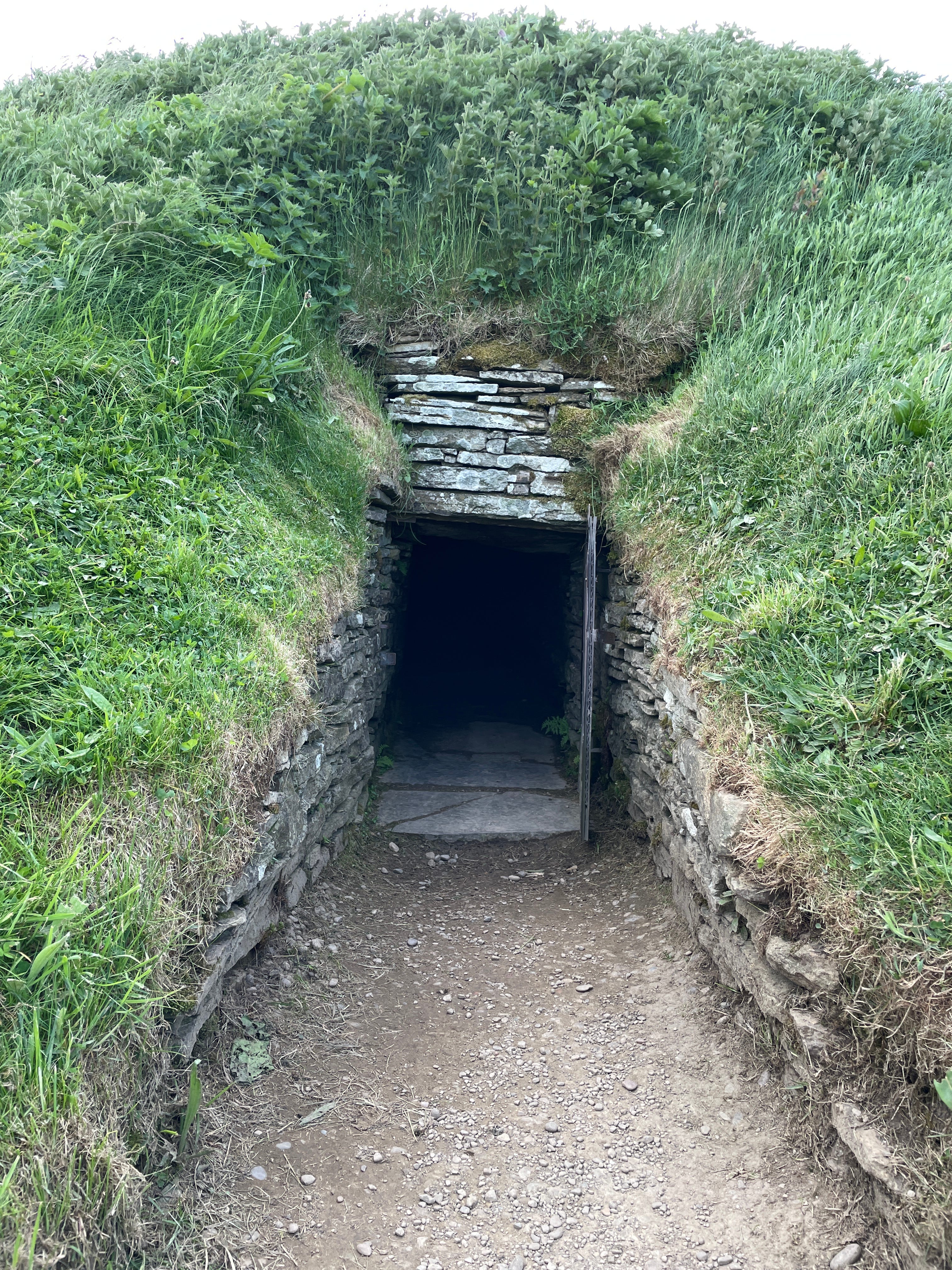
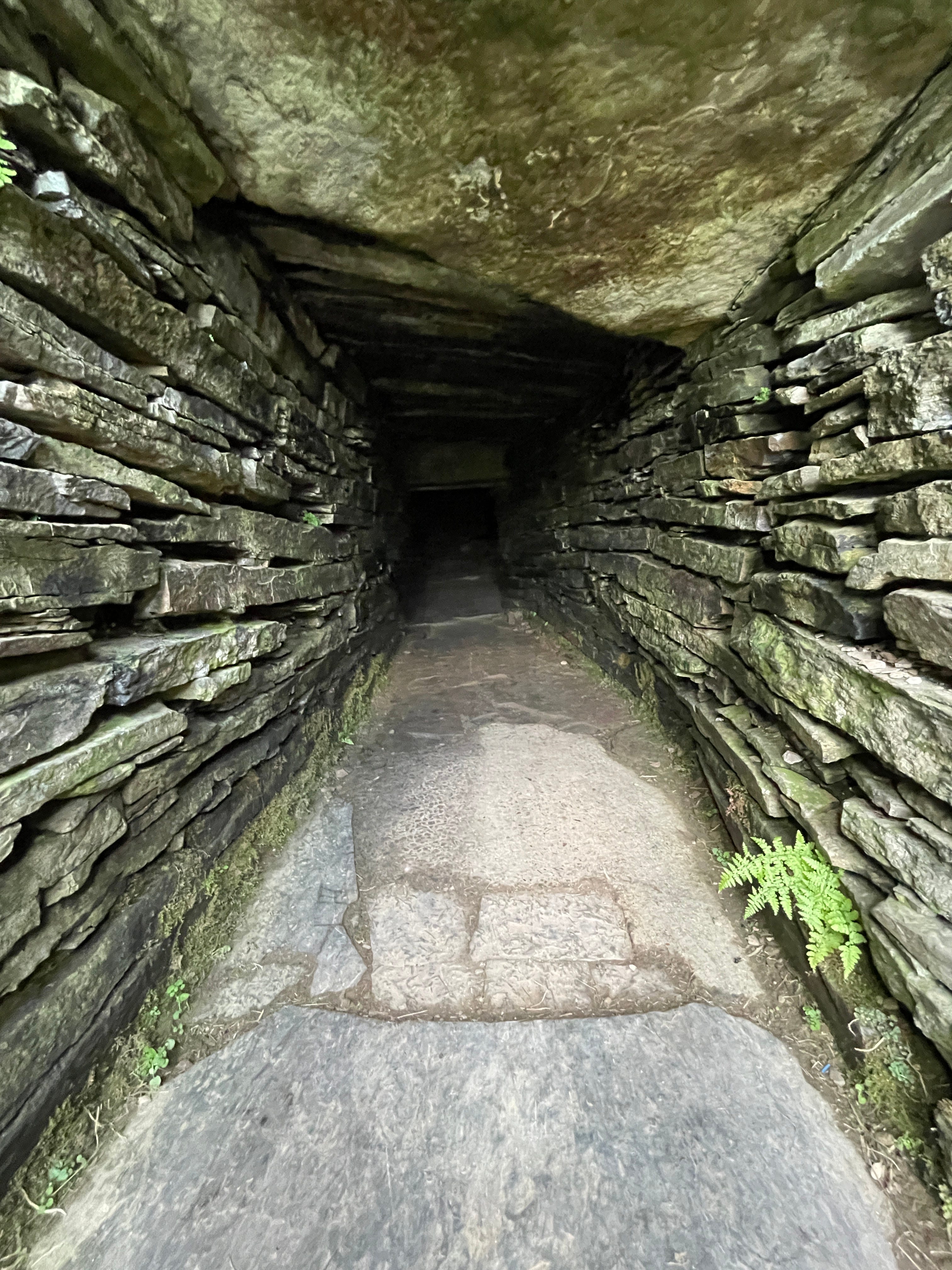
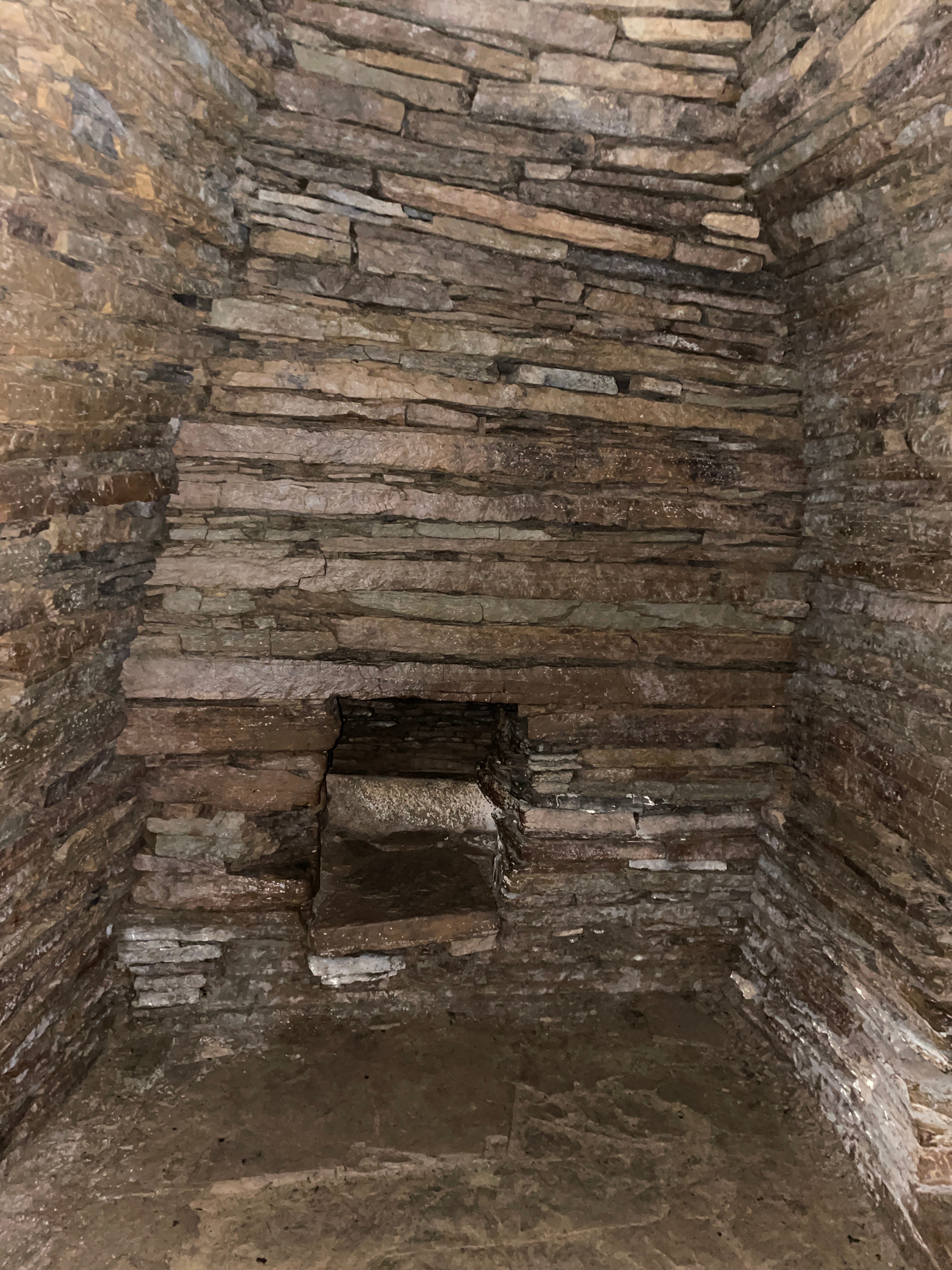
“The earliest investigators of prehistoric astronomy paid most attention to stone circles. More recent workers have included rows of stones in their research. Perhaps because of this concentration on settings of standing stones it is still not generally realised that many Neolithic tombs, some more than a thousand years older than the first stone circle, also were planned to face the sun or moon.”
—Aubrey Burl, Prehistoric Astronomy and Ritual (1983)