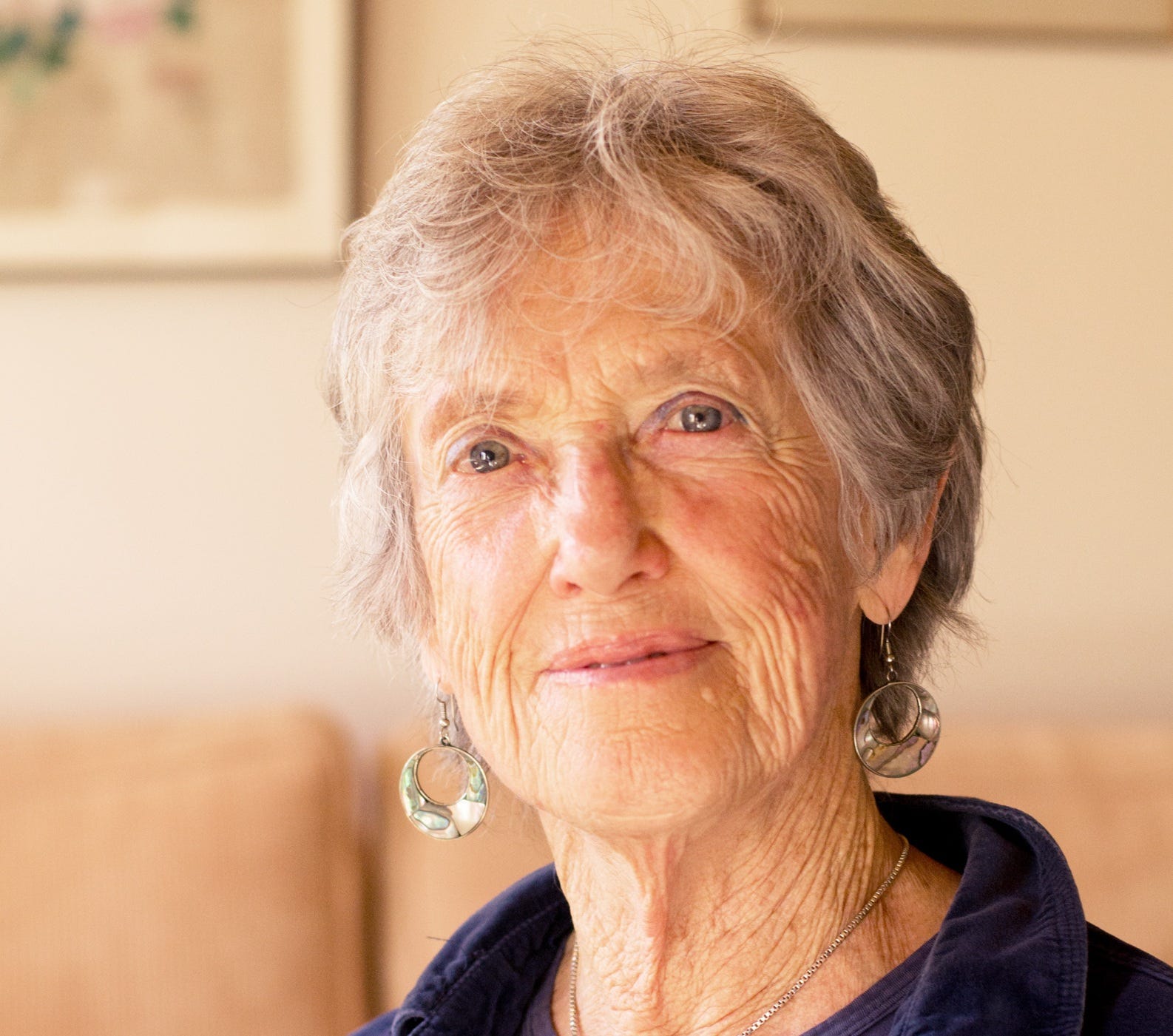
Rare Joanna Macy
Bringing you the hard-to-find Macy wisdom you might otherwise miss!


As I sometimes tell my students, if you want to find stuff that others don’t find, you have to look in places that others don’t look.
The most well-known works of an author will be well combed over. So, how hard are you willing to work? How long are you willing to look to find the more obscure?
Haunt bookstores; scour footnotes; search without ceasing.
You never know what you might discover.
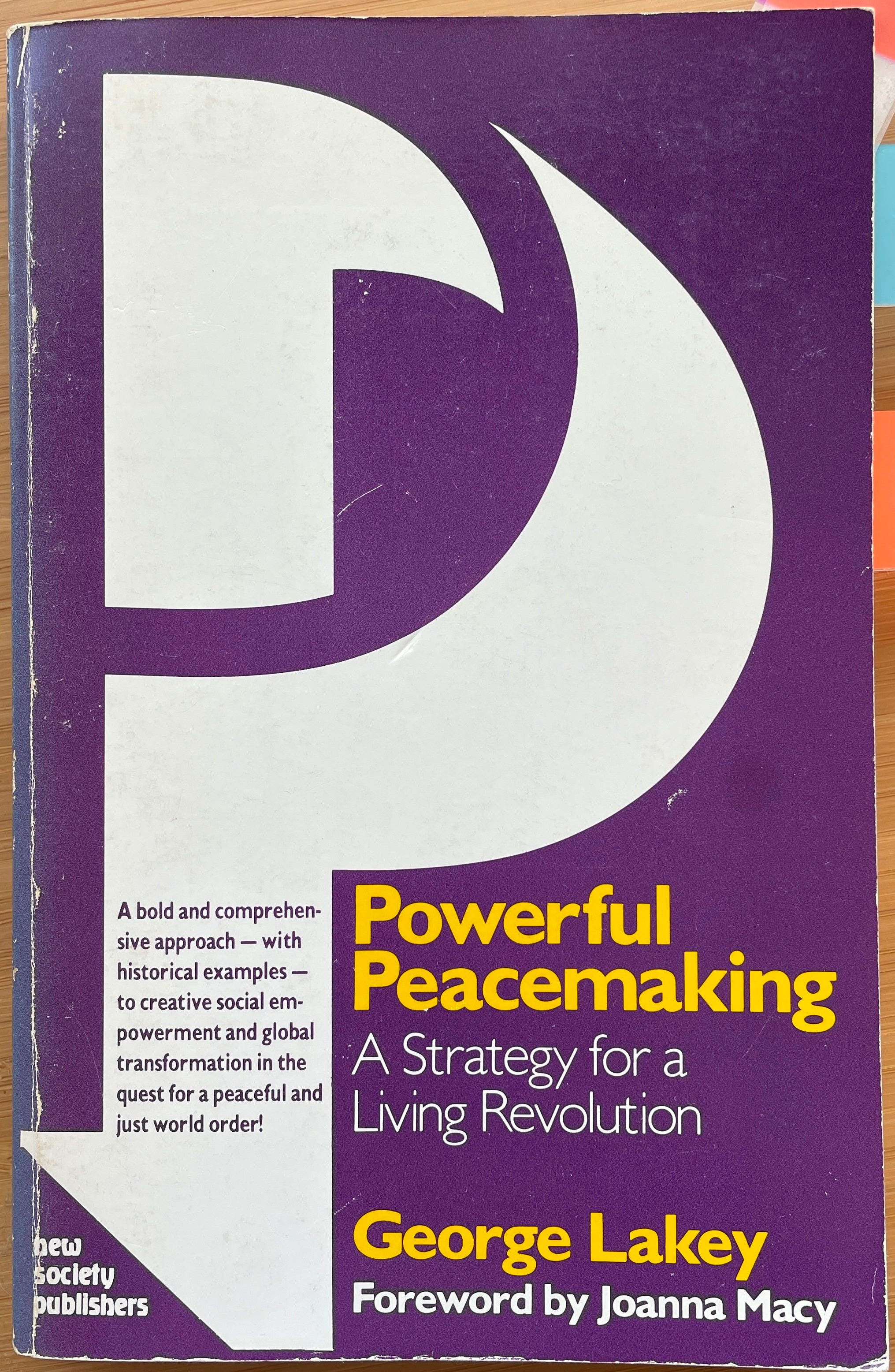
For ages this book has been in my library, but only a few days ago did I notice (or notice again) that it has a foreword written by my friend and teacher, Joanna Macy. With Joanna having passed over on July 19, 2025, this foreword suddenly felt like a new-found letter from a departed comrade—each word precious; every sentence, something to savor.
(You can read my tribute to Joanna Macy, “Bodhisattva of the Biosphere,” here.)
Joanna Macy on the New Sense of Interconnectedness Emerging in the Culture — from 1987
There is much to appreciate in Macy’s foreword to George Lakey’s book, but I was particularly interested in Joanna’s take on a topic that has been a focus of mine: the emergence and expansion over the last six or seven decades of ecological consciousness and the explosion of awareness around interconnectedness and interrelatedness.
I began researching this area in a more vigorous way circa 2011-2013, as I was finishing my doctoral dissertation on what I call “the Ecological Martin Luther King.” (For more on the Ecological King, check out this and this.)
So I was fascinated to read Joanna’s description of these developments in this foreword, some of which I will likely quote in my upcoming book on Dr. King.
Macy writes,
“A quiet revolution is underway in our modes of perceiving our world and in the panoply of perils and problems assailing it. Instead of coincidental developments competing for our attention and conflicting in their demands, we are increasingly able to see them as essentially interrelated manifestations.”
She continues:
“Few readers will have difficulty in seeing these kinds of connections once they are pointed out because the world appears more and more as a network of interwoven events. If a paradigm shift is occurring in our modes of consciousness, it consists in just that: a growing capacity to apprehend the interdependence of all phenomena. We sense afresh the seamless, intricate web of life; we awaken to our deep ecology; we picture the holographic nature of the universe; we engage with the hypothesis that our planet is itself a living organism.”
[Joanna Macy, 1987]
Connecting the Issues, Linking Our Movements
In the last years of Dr. King’s life he went further than ever before in articulating the inherent links between racism, war, and economic oppression, saying “all of these problems are tied together,” and affirming that “justice is indivisible.”
In the late 1970s, before the term intersectionality existed, Black feminists and queer activists such as the Combahee River Collective were doing intersectionality, providing an intersectional analysis and praxis. In the collective’s statement from April 1977 they wrote, “The synthesis of these oppressions creates the conditions of our lives.”
In a similar spirit, in this 1987 foreword by Joanna Macy we see her emphasizing the overlapping nature of contemporary problems and the shared connections between ecology and social justice.
“It is well to pause and appreciate that shift of mind” toward interdependence, writes Joanna, “for it is intrinsic to the revolution.”
“Without it we cannot build strategies or coalitions. Without it events appear chaotic, competing demands confuse and exhaust: Shall I work to save the whales or the rainforest? Shall I fight nuclear power plants or world hunger? Illiteracy or child abuse? Viewed systematically, however, these are not separate campaigns so much as different facets of the same struggle. We see their linkages, their intertwining roots, and we know that intervention at any point—including change in our own lifestyle—indirectly affects all others.”
The Major Cognitive Revolution of Our Time
Joanna Macy states,
“As a systems view of the world spreads, it brings a new understanding of the nature of power, one that is radically different than the linear, hierarchical notions to which we have been conditioned. This new understanding is, I consider, the major cognitive revolution of our time.”
Powerful, prophetic, and prescient wisdom from the great Joanna Macy. Thank you, friend.